 |
| Click here for more images |
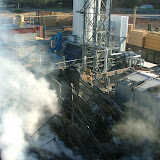
The largest fire in Colac for many years started at 1.15am on 9 January this year at the Associated Kiln Driers (AKD) plant in Forest St. It destroyed three drying kilns and $60,000 of radiata pine with a total damage bill of around $2.5 million.
Region 6 Operations Officer Brian Brady describes AKD as a "24-hour-a-day operation, with steam generated in the kilns by pumping hot oil through pipes and into a water bath. The plant deals with the end product of logging from plantations, processing the wood and turning it into building products for export and local markets.”
The two mill complexes have their own forestry industry brigades (FIB) and this fire was the most damaging in AKD's history. The worker operating the kiln was conducting routine temperature checks within the kilns when he thought he heard a crackling noise. Upon investigation he discovered a fire in the rear of one the fully-loaded kilns and called 000. AKD workers were attacking the fire when Colac brigade arrived.
“When fire crews arrived, the fire seemed uncharacteristically intense given that it was only a drying kiln loaded with timber!" Brian says. "I asked the kiln operator if anything was likely to explode, given that the fire was behaving and sounding like there may have been pressure vessels involved and venting within the kilns.
"Unknown to fire crews, in the initial stages of the fire the electric oil pumps were still pumping hot pressurised oil into the fire that had started in one kiln and then spread to the other two. We asked them to please turn off the oil pumps, which reduced the fire intensity rapidly!”
An oil storage tank 25 metres above the kilns was affected by direct flame contact and radiant heat, and began to boil and spew its flammable contents around the fireground. A 64mm handline and then the monitor from Colac Tanker 1 resolved that problem by cooling the tank and supporting metal structure.
Spilt oil created a major slip hazard around the area, however, and the Environmental Protection Agency (EPA) attended to monitor run-off water into nearby drains leading to Lake Colac. No environmental damage was caused.
Lieutenant Gary DeVercelli of Colac brigade was the Incident Controller and called in the Corio Teleboom. Ballarat City ladder platform and Pumper 2 along with Geelong City Pumper 2 responded shortly after. Lieutenant DeVercelli sectorised the fire into two, and a total of eight brigades and 60 firefighters took more than an hour to get the fire under control.
At its greatest intensity, flames were more than 25m high. Quick action and a lack of wind contained the fire to the three chambers and a significant amount of timber nearby remained untouched.
The plant is the town’s largest employer and is situated on its own huge block. While the fire was unusually large, it had only a slight effect on production, and none of the plant’s 200 staff were taken off duty.
Outlying brigades from Yeo, Irrewarra and Cororooke were called to the incident, along with the Region 6 Headquarters brigade, which ensured crew welfare through the night. All CFA crews were stood down by 8.30am with the AKD/Calco FIB remaining on site during the investigation phase in case of flare ups.
The cause of the fire is believed to have been a malfunction in the pressurised hot oil system within the kilns.

0 comments:
Post a Comment